
A curved edge needs a finish that follows its shape without pulling it out of place. Bias-cut fabric has the flexibility to do that, which is why it is used around necklines, armholes and other edges that are harder to finish with a straight strip.
Follow the curve without stretching the piece
Bias tape gets its flexibility from the diagonal cut. During sewing, it should follow the fabric rather than stretch it. Tape pulled too tightly can gather the edge; too much slack can leave a wavy finish.
Try the tape and fold on a scrap with a similar curve before sewing the finished piece. This helps you check how to guide the two fabrics together.
Cover a raw edge
An unfinished edge leaves fabric threads exposed. Bias binding can wrap around that edge and enclose it. The stitching still needs to hold both the binding and the main fabric securely; binding cannot compensate for a poorly sewn join.
The tape must be wide enough for the edge and the thickness of the layers. Check the available tape formats before choosing the fold.
Keep the finish consistent
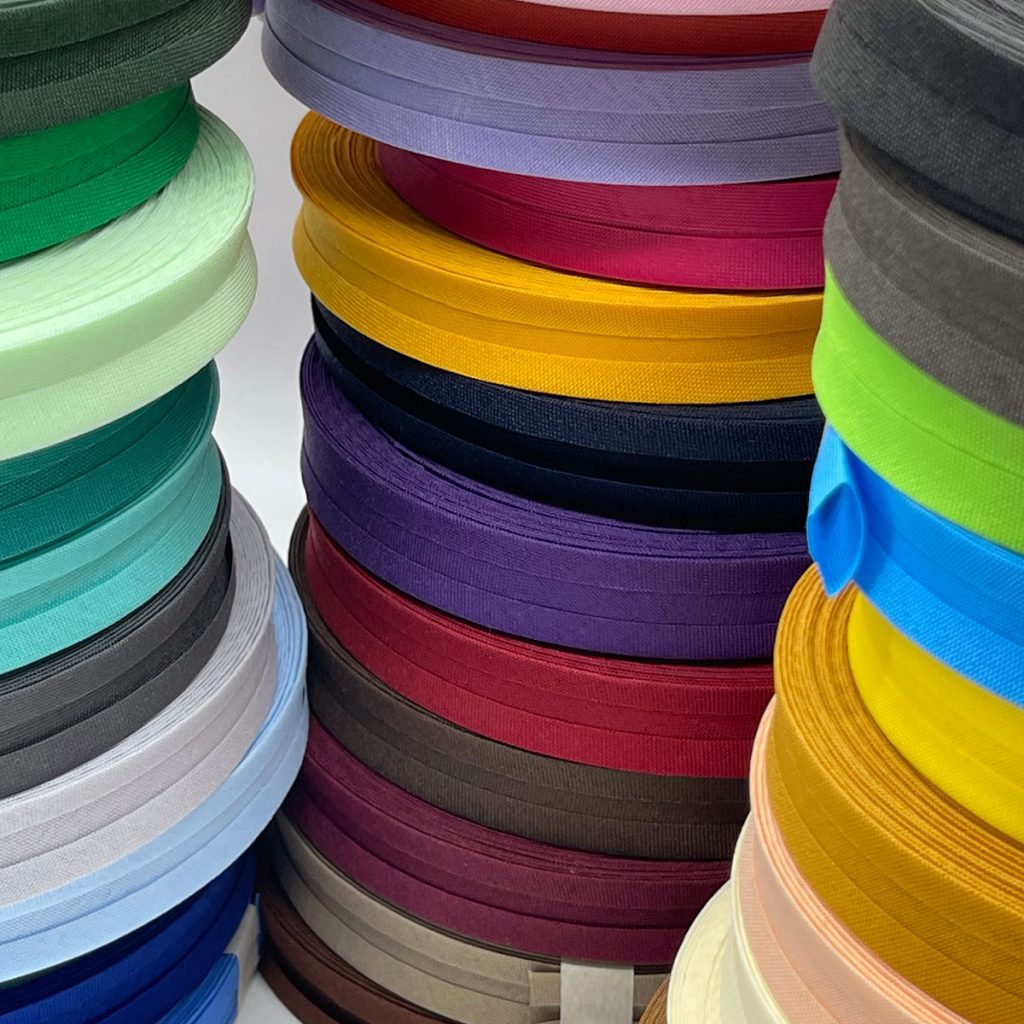
Bias tape can match the fabric or provide a contrasting border. It also lets you repeat a finish across several edges of a garment or household item.
To choose between a finish turned to the inside and a visible binding, compare single-fold and double-fold tape. For specific projects, see what bias tape is used for.