

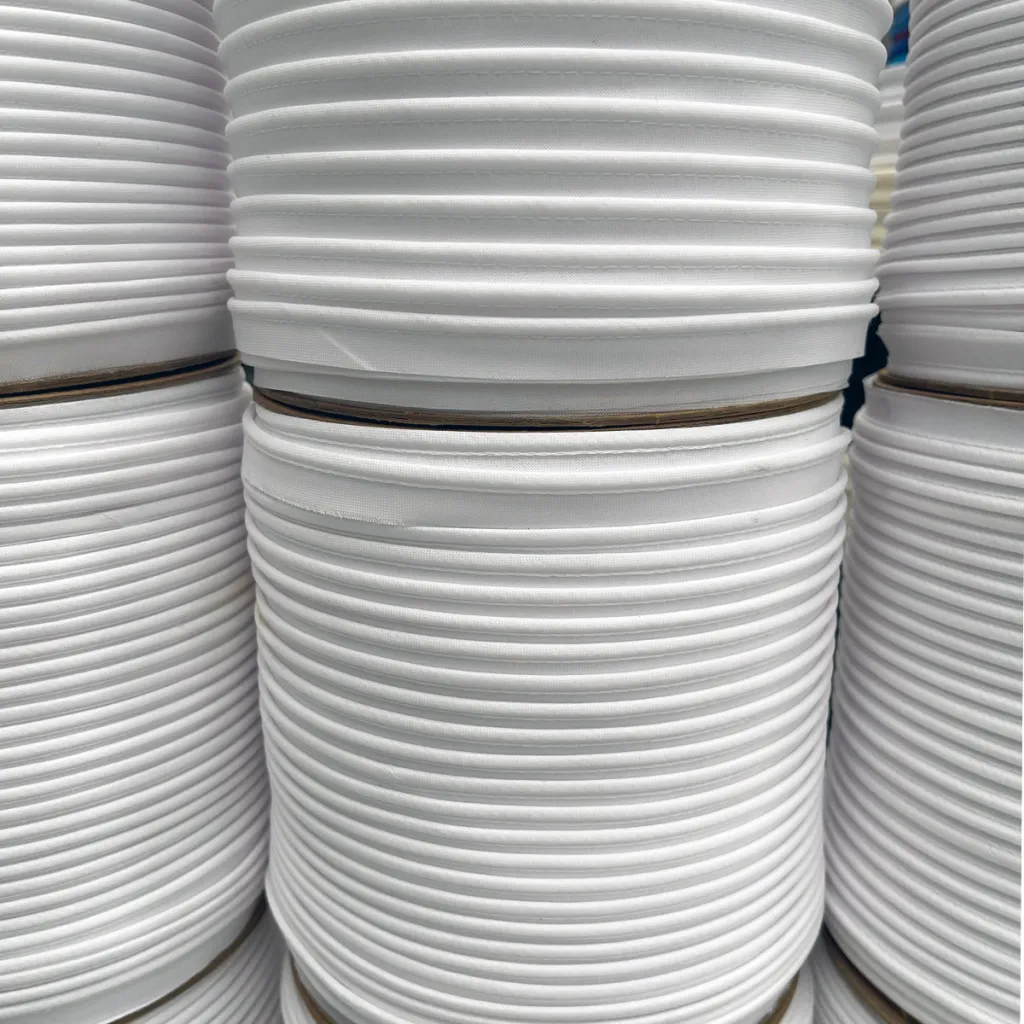
Bias tape is a strip of fabric cut diagonally across the grain, usually at a 45-degree angle. It is also called bias binding. The diagonal cut lets the strip follow curves and contours more easily than fabric cut on the straight grain.
The cut and the fold describe different things
“Bias cut” tells you how the strip is cut from the fabric. The fold describes how its edges are prepared. Tape may be supplied flat or with folded edges ready for sewing, so both details matter when specifying a binding.
Making the tape starts with fabric, which is cut into strips and prepared in the required form. Material, width and fold depend on the item being sewn. See our tape formats and the difference between single-fold and double-fold bias tape.
Flat binding and corded piping
Flat bias tape covers or finishes an edge. Corded piping has a cord inside the fabric to create a raised edge, as shown on the cushions on this site. The two finishes serve different purposes even though both use strips of fabric.
For a raised seam detail, see our corded bias tape. For flat binding, first decide how much of the edge needs covering and where the stitching will sit.
What to specify
Choose the material, width and fold before selecting a color. Our product pages describe the fabric options available from Cintas El Elefante. The term “bias tape” alone does not specify a tape’s fiber content or dimensions.